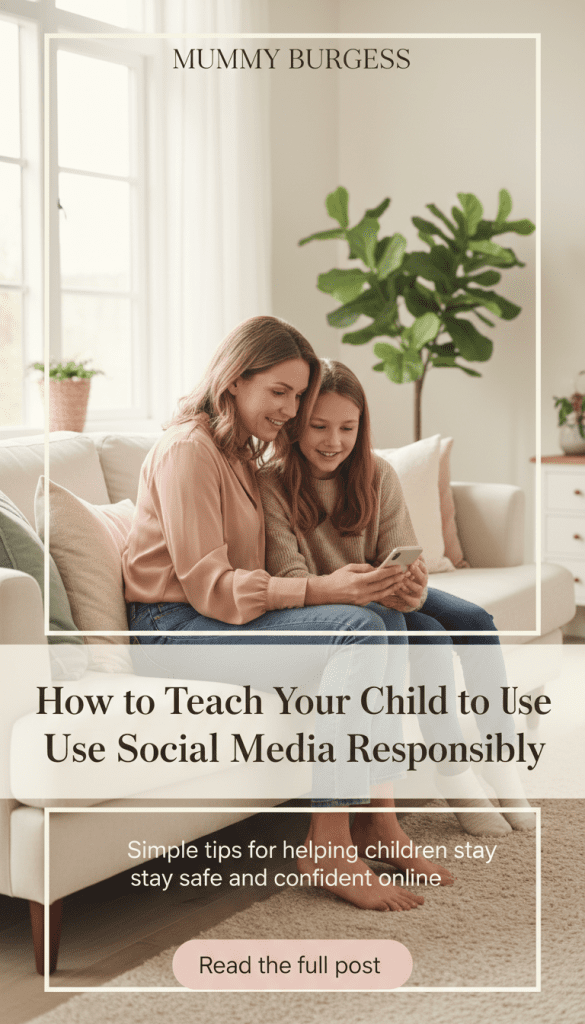
Teaching Your Child to Use Social Media Responsibly
In today’s digitally connected world, social media is part of everyday life for many children and teenagers. While it can be a great way to stay in touch with friends, explore interests and express creativity, it also comes with challenges that young people may not always be ready to handle on their own.

As parents, one of the most important things we can do is help our children build healthy digital habits from the start. Teaching them how to use social media responsibly can help them feel more confident online while also keeping them safer.
Start with an open conversation
Before your child begins using social media, make space for honest and age-appropriate conversations about what it is, how it works and what they might come across online. Try to keep the tone open rather than overly strict, so they feel comfortable coming to you if something worries them later on.
You could talk about:
- what they want to use social media for
- who they plan to connect with
- what kind of content is appropriate to share
- what to do if they see something upsetting or uncomfortable
The goal is to make social media feel like an ongoing conversation, not a one-off lecture.
Set age-appropriate boundaries
Many social media platforms have age restrictions for a reason. Make sure your child is old enough to use a particular platform and take time to explore the privacy settings together. This private school in West Sussex suggests being clear about the boundaries you expect them to follow, such as not sharing personal information or connecting with people they do not know in real life.
It can also help to agree on a few simple rules from the beginning, such as:
- which apps they are allowed to use
- how much screen time is appropriate
- whether accounts should be private
- where and when devices can be used
Having clear boundaries in place early on can make things much easier as they grow.
Teach privacy and online safety
Children do not always realise how quickly personal information can spread online. Talk to them about why privacy matters and help them understand what should never be shared publicly, such as their full name, address, school, phone number or live location.
This is also a good time to discuss:
- using strong passwords
- not sharing passwords with friends
- being cautious with direct messages
- recognising fake accounts or suspicious behaviour
- asking for help if something feels wrong
Helping children understand digital safety early on gives them skills they will use for years to come.
Talk about kindness and digital etiquette
One of the biggest lessons children need online is that real people are behind every screen. Encourage your child to think before they post, comment or reply. A good rule is to ask whether they would say the same thing face to face.
Talk about the importance of:
- being kind in comments and messages
- avoiding gossip or pile-ons
- respecting other people’s privacy
- not sharing photos or videos of others without permission
These small habits can make a big difference in how they behave online and how they treat others.
Keep an eye on things in the early stages
When children first start using social media, it makes sense for parents to stay involved. That does not have to mean hovering over every interaction, but it does mean checking in regularly and keeping communication open.
Depending on your child’s age, you might:
- follow their account
- review privacy settings together
- talk about who they are interacting with
- check what kind of content is appearing in their feed
The aim is to guide rather than control, so they gradually learn how to make safe choices for themselves.
Discuss the impact on mental wellbeing
Social media can affect confidence, mood and self-esteem, especially when children start comparing themselves to others. It is important to remind them that what they see online is often a highlight reel rather than real life.
Encourage balance by making space for offline activities too, whether that is time outdoors, hobbies, reading, family time or simply taking a break from screens. Helping your child notice how social media makes them feel is a valuable habit in itself.
Final thoughts
Teaching your child to use social media responsibly is not about getting everything perfect. It is about giving them the tools, boundaries and support they need to navigate the online world with confidence.
By keeping conversations open, setting clear expectations and staying involved, you can help your child build healthy digital habits that support both their safety and wellbeing.
In today’s digitally connected world, social media has become an integral part of our lives. For children, navigating this online landscape can be both exciting and challenging. As a parent or guardian, it’s essential to guide them in using social media responsibly.
K Elizabeth xoxox
*Collaborative Post